“It is often said that before you die your life passes before your eyes. It is in fact true. It’s called living.”
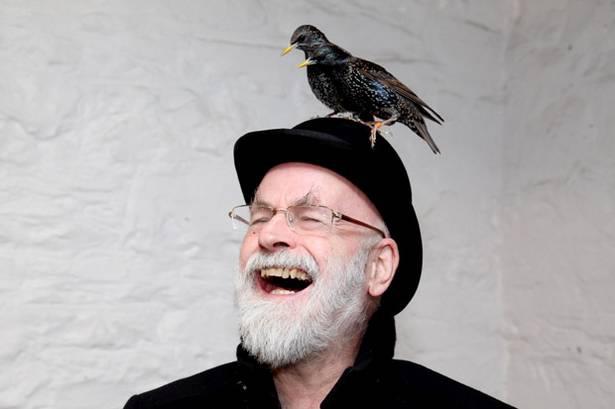
Terry Pratchett
Terry Pratchett passed away today at 66. The author of the Discworld series, among other fine books, was diagnosed with early onset Alzheimer’s in 2007, though he kept writing up until last summer, when he completed his last book.
His publisher, Larry Finlay of Transworld, told the BBC
He “enriched the planet like few before him” and through Discworld satirised the world “with great skill, enormous humour and constant invention,” said Mr Finlay.
“Terry faced his Alzheimer’s disease (an ‘embuggerance’, as he called it) publicly and bravely,” said Mr Finlay.
“Over the last few years, it was his writing that sustained him. His legacy will endure for decades to come.”
Pratchett died at home surrounded by his family, “with his cat sleeping on his bed,” according to Finlay.
Terry Pratchett’s Twitter account announced his death (death talks in capital letters) pic.twitter.com/vdbtdpZbyj
— BBC Newsbeat (@BBCNewsbeat) March 12, 2015

A friend recommended Pratchett to me about ten years ago, and as a lifelong fantasy reader, I’m not sure why I didn’t start reading his books sooner. I’d read Good Omens, a book co-authored by Pratchett and Neil Gaiman, and my friend thrust a stack of Discworld books into my hands and told me to get to reading. Small Gods was the first, and it really captured something in my heart. I loved his Granny Weatherwax books, too, and his non-Discworld novel Nation is still one of the finest books I’ve ever read.
The world is definitely a sadder place without you, Sir Pterry. Your unmatchable wit and beautiful imagination will be missed.
“…no-one is finally dead until the ripples they cause in the world die away… The span of someone’s life, they say, is only the core of their actual existence.”
― Terry Pratchett, Reaper Man





Follow Us!